We Just Wanted a School That Matched Our Values.
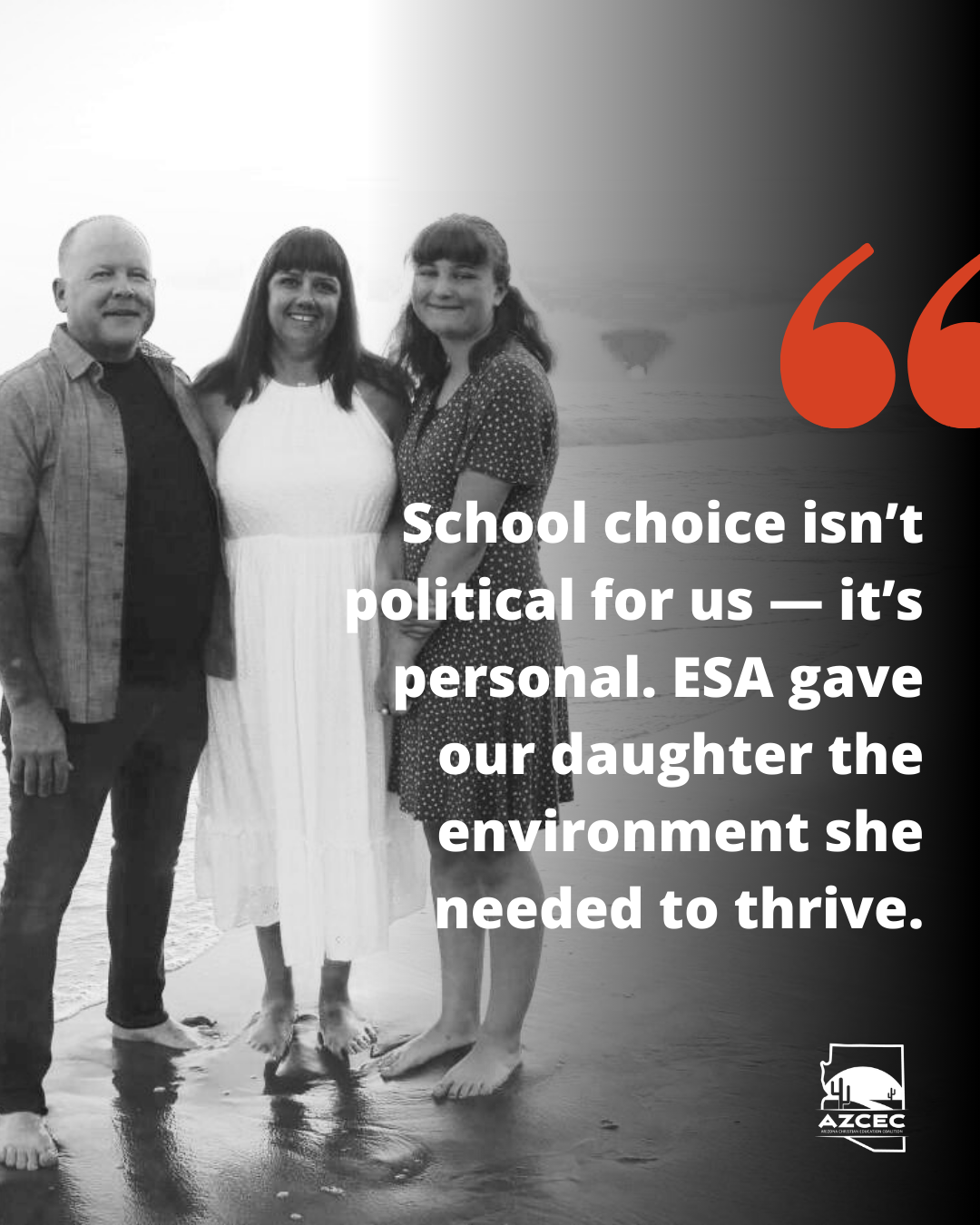
 Angela Hamby and her husband are a dual-income family living in Northern Arizona.
When both parents needed to return to work, homeschooling was no longer sustainable. They enrolled their daughter in a Montessori school nearly 30 miles from their small town, hoping it would be a good fit.
It wasn’t.
Over time, they began to realize the school’s emphasis and curriculum did not align with their family’s religious convictions. A required sex education program conflicted with their beliefs, and when they requested to review the materials, the process felt unnecessarily difficult and discouraging.
Although they were permitted to opt their daughter out, she was the only student not participating. She was required to sit alone in a separate room while 30 classmates attended the session.
For a teenage girl, that isolation was deeply uncomfortable.
There were also classroom comments about political figures that the family felt crossed the line from education into opinion. Taken together, the environment no longer felt healthy or supportive.
Angela and her husband weren’t looking for something elite or exclusive.
They were simply looking for a school that reinforced the values they teach at home.
Through Arizona’s Empowerment Scholarship Account program, they were able to enroll their daughter at Flagstaff Christian School — a smaller, faith-centered school that proved to be a dramatically better fit.
The difference has been significant.
With approximately 120 students combined in the middle and high school, the smaller environment provides meaningful one-on-one instruction. Teachers know their students personally. Mentorship is intentional. Structure is clear.
She even completed 12 college credits before entering her senior year.
After briefly experiencing the size and pace of a local district high school, she felt overwhelmed. That confirmed what her parents already sensed — a smaller, structured setting was better for her learning style and personal growth.
ESA made that possible.
Living in Northern Arizona comes with financial realities, including higher housing costs. Without ESA funding, attending a local Christian school would not be financially feasible for their dual-income household.
Today, Angela describes their school as a source of hope and stability during the challenging teenage years. They volunteer regularly because they value the opportunity so deeply.
If ESA funding were no longer available, they would return to homeschooling rather than enroll in public school.
For this family, ESA is not about preference.
It is about fit.
It is about values.
It is about choosing the right environment for their daughter to grow and thrive.
When efforts are made to limit ESAs or restrict educational freedom, families like Angela’s are the ones who feel the impact.
School choice is not theoretical.
It is personal.
It is about real children.
And it gives parents the ability to choose the educational path that best meets their child’s needs — regardless of income or zip code.